
Michael Pollan's Food Rules
by benoit
This work has been commented by 2 curator(s). Read the comments
Title
Michael Pollan's Food Rules
Headline
Can organic feed the world?
Concept author(s)
Marija Jacimovic; Benoit Detalle
Concept author year(s) of birth
1984; 1985
Concept author(s) contribution
Both Marjia Jacimovic and Benoit Detalle co-directed, co-animated and co-produced the film. Furthermore, Marija also edited it and produced the soundtrack.
Concept author(s) Country
Serbia
Designer(s)
Marija Jacimovic; Benoit Detalle
Friendly Competition
Competition category
Visual communication practice
Competition subcategory
moving
Competition field
nonacademic
Competition subfield
professional
Subfield description
Currently working as a freelance filmmaker and writer in Belgrade, Serbia I am particularly interested in exploring stories that seek to go beyond simple narratives. With a formal training in Visual Anthropology, my work is strongly rooted in a critical theory perspective that understands audio-visual media as critical to power relations. Examples of this include my short remix work GLUED (2012), as well as my editorial work on Johan Grimonprez's retrospective publication “It's a poor sort of memory that only works backwards” (Hatje Cantz, 2011). I have also co-directed the award-winning animated shorts “Michael Pollan's Food Rules” (2012) and “Does Brainstorming Work?” (2012), as well as directing an episode about the internet for the “Unspeak” (2013) web series produced by the Submarine Channel (NL). More about my work may be found on www.benoitdetalle.com
Check out the Food Democracy 2013 outlines of Memefest Friendly competition.
Description of idea
Describe your idea and concept of your work in relation to the festival outlines:
Ideas are the place from which everything grows. At first, they are nothing but figments of the imagination, yet with persistence, courage and dedication, they can go out into the world and make change. When Michael Pollan asks 'can organic feed the world?', that is a (dangerous) idea that holds power. It has the power to sink into people's consciousness, and through that consciousness, affect change. Marija Jacimovic and I wanted to promote that message in a way that we believed would captivate people's imaginations as to what is possible.
What kind of communication approach do you use?
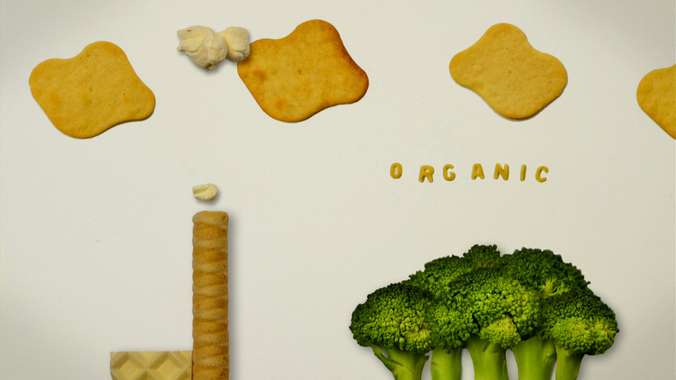
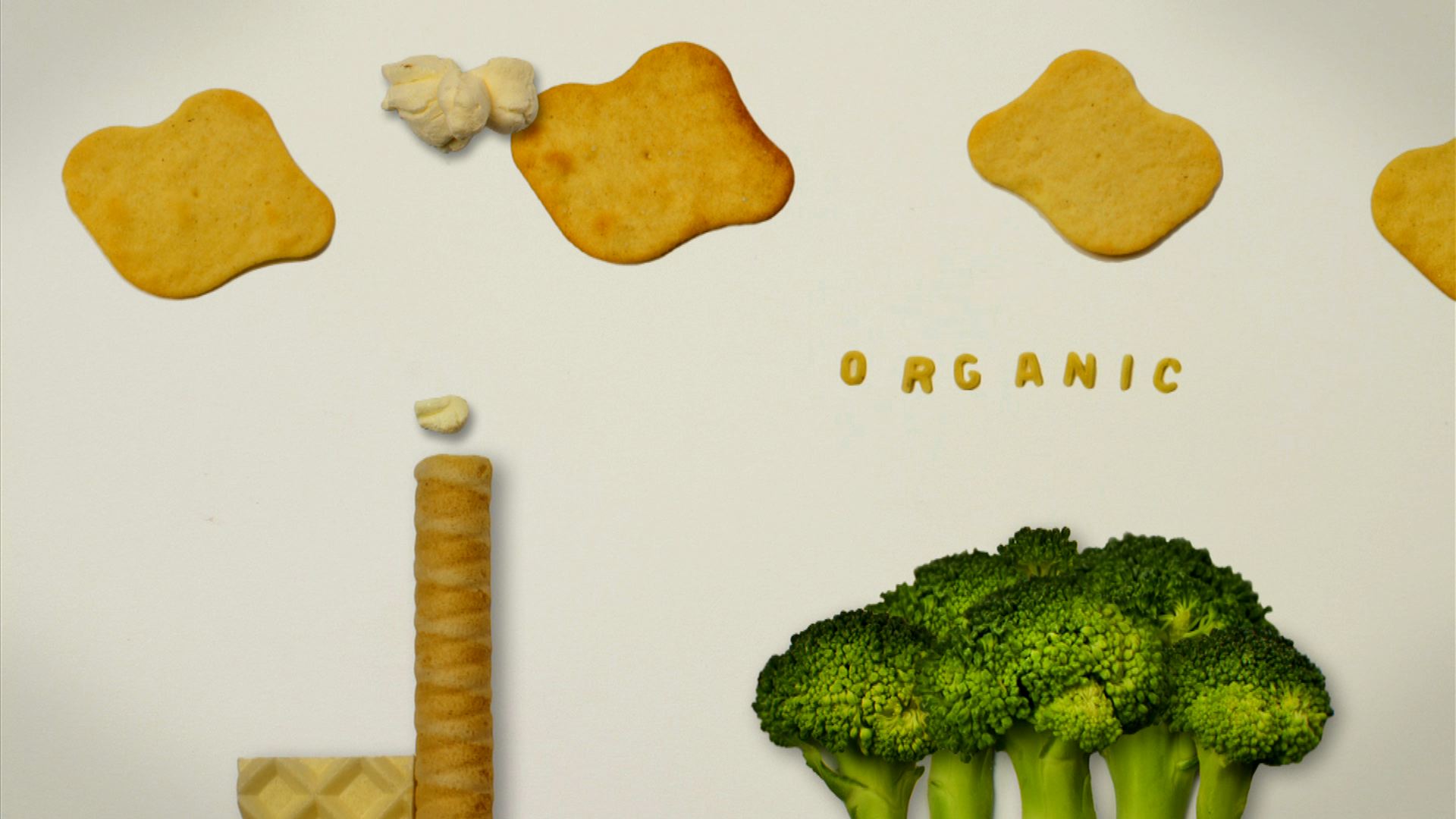
Marija Jacimovic and I chose to use a table-top stop-motion technique. We decided on a clean and simple approach to maximise the effect (as well as making it as DIY as possible—it was shot on our kitchen table). The concept from the very start was to use food as props/characters in the film as food is so visually interesting and complex, thereby implicitly bringing people's attention back to that fact.
What are in your opinion concrete benefits to the society because of your communication?
The power of "Michael Pollan's Food Rules" is that through its simplicity it can make people pause for a second and reflect on their perceptions in relation to food: where does food come from? who is producing that food? why are they producing it and distributing it in such a way? That is the only real effective power—the power to make people reconsider what/how they understand their environment. It is the tap on the shoulder that may sow the seeds of a new collective vision in relation to the food industry.
What did you personally learn from creating your submitted work?
"Michael Pollan's Food Rules" was both Marija Jacimovic's and mine first directed animated film. It was, and still is, a huge learning experience in the different stages of production. We started with a vision but not much practical experience and went ahead with it; borrowing equipment and sacrificing our kitchen table for a month, we relished the challenge to bring the film out into the world for others to see.
Why is your work, GOOD communication WORK?
Simple and effective. From the start it was crucial for us to adhere to those two points. We knew how hard it is to get people's attention, hence the need for a simple, clean, appealing visual style. Secondly, given that Michael Pollan's talk is of an educational nature (it was taken from an RSA talk), the film had to be effective. Is it visually communicating in the best possible way what is being said? is a question we asked ourselves a million times.
Where and how do you intent do implement your work?
We have been fortunate enough to have "Michael Pollan's Food Rules" shown around the world: it has been shared extensively on the internet (even Michael Pollan shared it on Twitter and website) and it has been screened at many international festivals. By eschewing tradition, we uploaded the film online from the beginning and always promoted its sharing. (We even have had teachers asking to show the film to students, something we were delighted about). To this day, we continue to seek suitable forums in which to share it.
Did your intervention had an effect on other Media. If yes, describe the effect? (Has other media reported on it- how? Were you able to change other media with your work- how?)
Given the buzz around the film when it was released, the mainstream press took an interest. Articles about it were written on the Huffington Post, on The Atlantic, and on various food related websites. We even received some airtime on Serbian national television in the context of a program about food. This was a particularly interesting experience as topics to do with organic food culture is relatively new and barely overtly discussed in the country. Given that the Serbian economy is heavily dependent of agriculture on the one hand yet on the other market pressures are driving that agriculture in certain directions, this addition (albeit a drop in the ocean) to the debate is crucial.
Curators Comments

Tony Credland
This method of encouraging people to listen to a well written lecture or text is a useful method of disseminating information to a wider audience. The lecture is worth listening to and the stop frame animation with fresh vegetables and other basic food stuff makes it entertaining and enjoyable to watch. The design is simple and as the RSA animations show; that visual communication is important to keeping us focused and helps absorbing information.
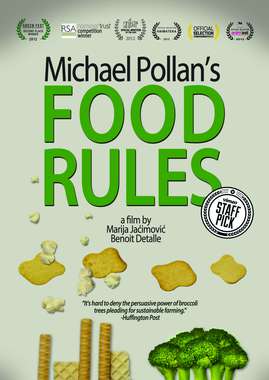
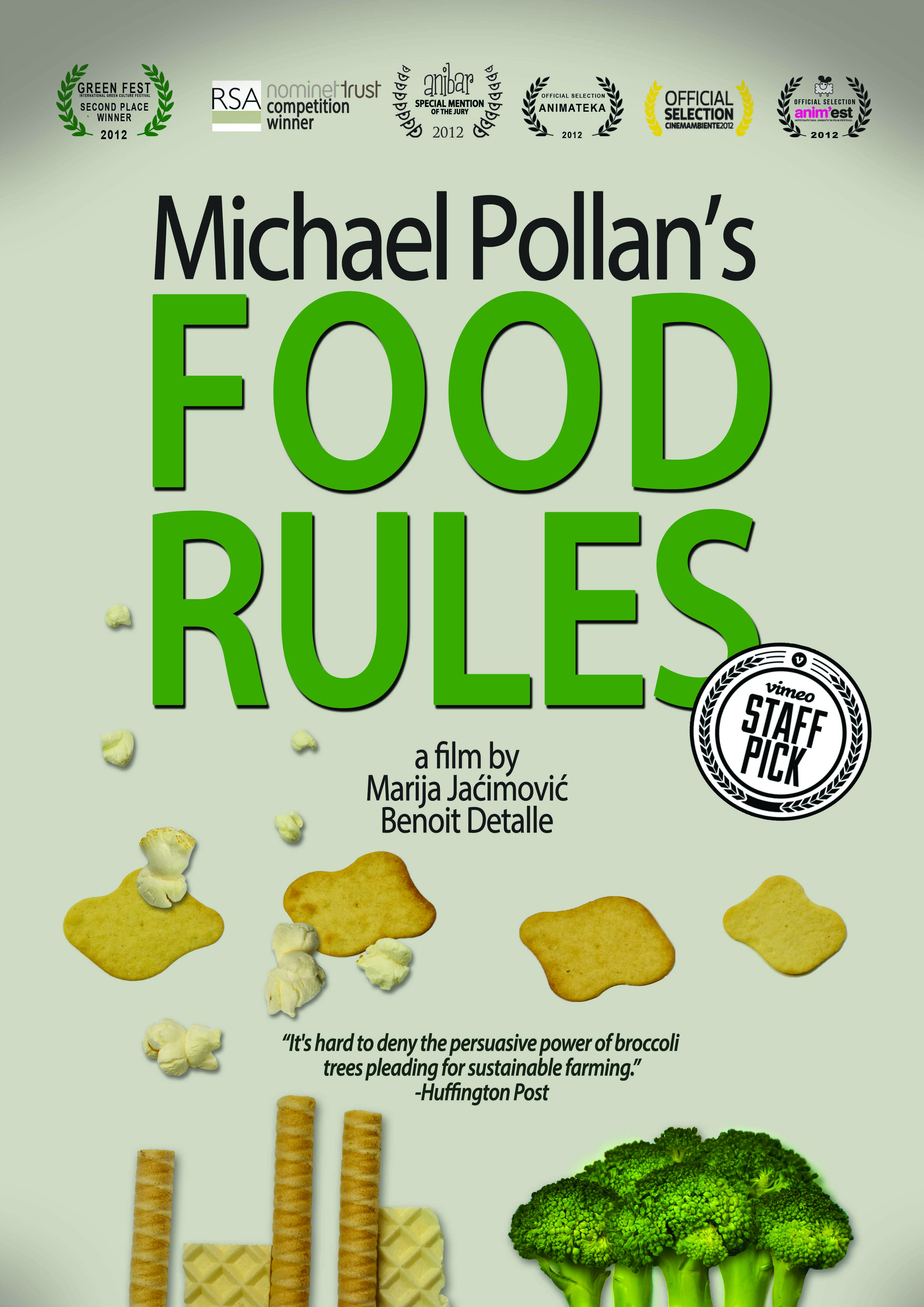
I was not so convinced by the posters design as this was so different to the animation. I am sure that Serbia is on the edge of that point where supermarkets and corporations are taking over the food production so this is an important time to raise the debate.
Shoaib Nabi
Marija Jacimovic; Benoit Detalle, I very much enjoyed this stop motion animation and found it informative, entertaining and a good tool to be shown in schools and classrooms around the world in various languages.
I think you have the right venue to show this animation but I would encourage you for a action oriented result - meaning i.e. teachers should encourage activities following this animation for a class room to work on, etc.
The video seems passive yet I have given it my vote because I see the potential of it reaching to the youth in its simplicity and adoptability. It can be viewed in India or Serbia - the message remains intact.
Wishing you would take this beyond your proposal. Best of luck.