Instructions to Hearing Persons Desiring a Deaf Man
by brookegriff
This work has been commented by 3 curator(s). Read the comments
Title
Instructions to Hearing Persons Desiring a Deaf Man
Headline
[an animated film]
Concept author(s)
Brooke Griffin
Concept author year(s) of birth
1992
Concept author(s) contribution
the director and animator of the film
Concept author(s) Country
United States of America
Friendly Competition
Radical intimacies: dialogue in our times (2014)
Competition category
Visual communication practice
Competition subcategory
moving
Competition field
academic
Competition subfield
student
Subfield description
Harvard University, department of Visual & Environmental Studies
Check out the Radical intimacies: dialogue in our times 2014 outlines of Memefest Friendly competition.
Description of idea
Describe your idea and concept of your work in relation to the festival outlines:
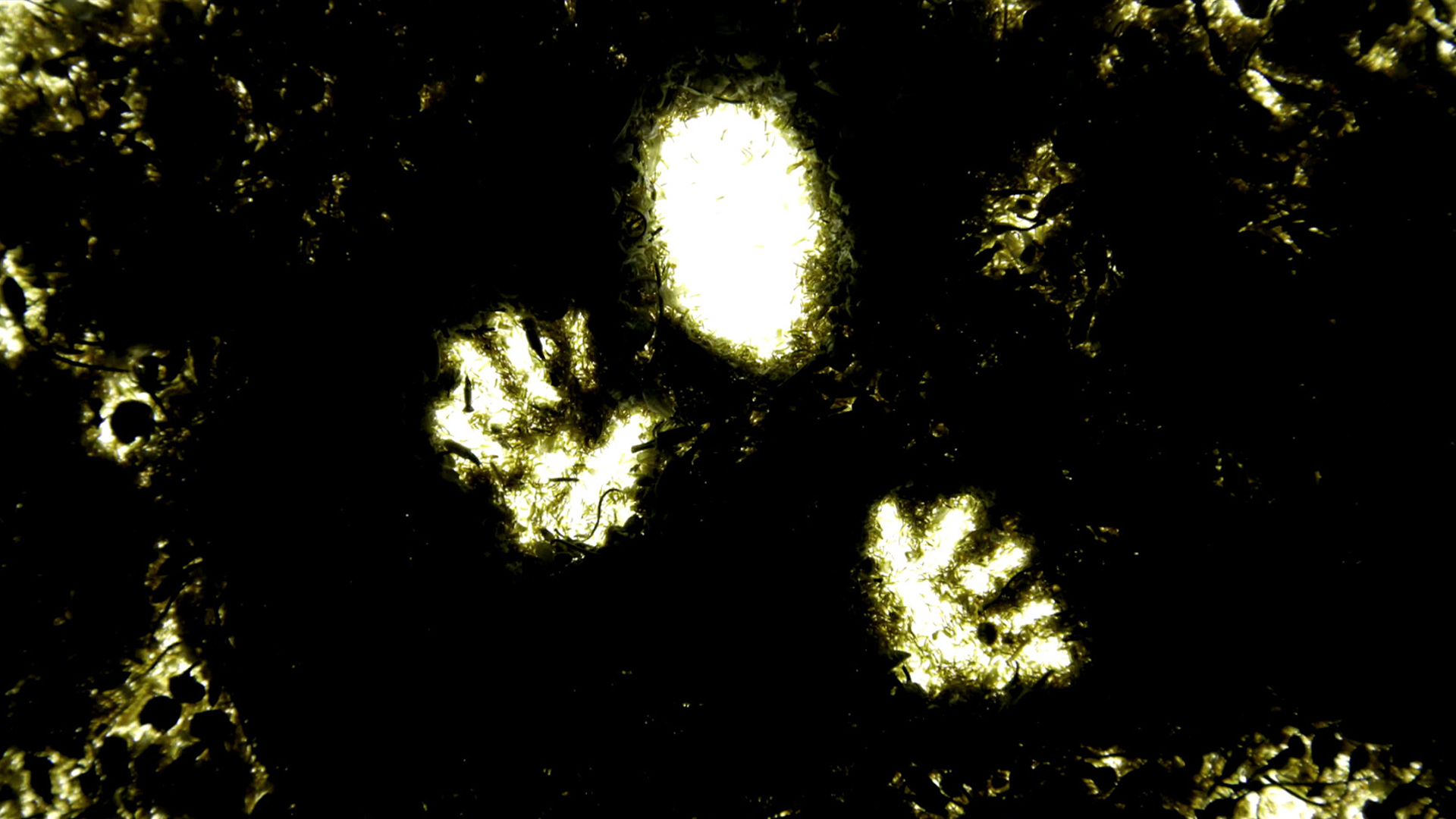
This short animated film is based on a poem of the same name by Deaf poet Raymond Luczak. Both the film and the original poem explore the poet's own story of frustration and resilience: the struggle of a Deaf gay man to find love in the Hearing community. Without any sort of spoken word, the film's only use of language is in American Sign Language, left untranslated. The project aims to reconsider the substandard role of disability in film and media.
When a video of the poet himself Signing the poem is realized on screen, the usual position of the Deaf person in society is reversed. Now the audience is the one in need of translation. This disability that is so often seen as a setback by the Hearing community here becomes a means of empowerment and beauty. In this way, the work strives to critique our common ideas of Deafness and disability in the Hearing world.
What kind of communication approach do you use?
The work is a mixed-media animated video, which means the narrative of the poem is overpowered by the grittiness of the film's texture. Different media (such as paint, digital animation, and tea leaves) reflect changing perspectives and the complexity of Deaf-Hearing interactions. The medium of fast-paced video stresses the rapid developments of technology in opposition to stagnant social change.
What are in your opinion concrete benefits to the society because of your communication?
I think the most important benefit of the work is the opening of a new world to Hearing audiences. Most people are unaware that Sign Language poetry even exists, and similarly are unconcerned with Deaf culture, because it is not something within the realm of their own experience. For me, learning about Deafness and Sign Language was a stepping stone into the complex world of communication between the disabled and the able-bodied. I think this work carries with it the immediate realization that this is a depiction of Deafness unseen in film or media -- primarily because the Deaf and disabled seem to be most commonly depicted as objects of pity. I hope this work demonstrates how the Deaf are gifted in their own ways of communicating, so Hearing audiences can be the ones who are lost in translation for once.
What did you personally learn from creating your submitted work?
Through the work I learned a lot about Deaf culture and disability itself, as well as discovering how non-understanding can be a goal in itself in communicative practices. I remember being very nervous throughout the creation of this project that my audiences would not understand what I was trying to convey, that the complexity of the project for me would equate to confusion and uncertainty for them. However, by the completion of the project I finally came to realize that this confusion might be a goal of the project, that an uncertainty will allow the audience to decide for themselves what the work means.
Why is your work, GOOD communication WORK?
The work is intended to be shown alongside other film and animation projects at festivals or screenings. It is available online as well. In both contexts, the expectation for the viewer is that they will be seeing an animated film, something that will be sweet and childish and reminiscent of Saturday morning cartoons. However, the goal of the work is to upset that expectation and catch audiences off guard, to undermine the assumption that animation is a child's medium. The social critique and discomfort rendered by the work are intended to leave the viewer uncertain and perhaps more aware of their relationship to disability in film/media.
Where and how do you intent do implement your work?
Ongoing submissions to festivals around the world set the context for the viewing of the work, as well as some social media promotion and sharing through friends. Currently, the film is screening in Poland, Germany, Uruguay, Australia, and throughout the United States. As mentioned previously, the ideal implementation of the film is its presence amidst other animated fiction films, which often fulfill those expectations of childish naiveté and wonder that viewers hope to see in animated films. I hope the work can be something that bothers the viewers as the thing that "didn't quite fit" amidst the other works they saw, and in that way might stay with them.
Did your intervention had an effect on other Media. If yes, describe the effect? (Has other media reported on it- how? Were you able to change other media with your work- how?)
Because the project is an animated film based on a written poem rooted in the oral tradition of sign language, the work spans many types of media. While the work has evoked some response in the Deaf community, it has also caught the attention of other filmmakers, animators, and art students, which is more important I believe. I have had several animators tell me they hope to try my multi-media technique, but even more seem interested in how the technique coincides with the unique nature of the film's themes. Amidst these responses, I hope more young animators will shy away from the comfort and ease of meeting the expectations of audiences, and instead will challenge assumptions about animation as well as common depictions of disability in media.
Curators Comments
Scott Townsend
There are two kinds of emphasis in the competition projects this year- one is in using dialogue as a subject, while the second is creating and changing dialogue as part of a system of dissemination and audience engagement. This animation occupies a space in between potentially. It's about the subject of dialogue, and engages two 'audiences' potentially in some kind of mutual understanding when it is presented (deaf and hearing communities, which tend to be very separated socially).
The use of video and by hand animation is reminiscent in a sense of other animators including William Kentridge: the animation comes across as more physical and immediate and responding directly to the story.
There may be more of a need to clarify the positioning of the original author re a 'signed' poem- and the people he feels are impossible to communicate with- there is a nice level of affect in the animation re this, but the positioning of the idea of deaf minority within a 'mainstream' audience and the larger audiences assumptions about the deaf needs to be presented on some basic level.
Alex Jordan
Dear Brooke Griffin,
first please accept that my english is very bad (not in reading texts but in writing) so I try to give my best but I cannot go in deep grounds with my poor basical expressions.
I copy two parts of sentences of your explications:
...Now the audience is the one in need of translation....
...The narrative of the poem is overpowered by the grittiness of the film's texture....
As I know that you have yet had all the honnors of festival audiences (Berlin for example) I permit me to not to praise your very exciting short animationfilm and go back to the beginning: a deaf poet, his desire, his difficulties to be admitted in the gay - community... that was your starting point and you took it as material for a quite poetical (a new poetical) expression by mix-pickled media. a visual poetry which can be seen and interpretated by both the deaf other poet -he is not blind- and the spectators. in some way there is so no need for "translation"; excepted the R. Luczak sign in.
In some way it's YOUR finally poem. No?
The other thing is nevertheless the (written) necessity of translation of a poem "edited" in sign language. Wouldn't it not be possible to find a solution for that?
maybe in another form of film and not simply undertitled...
Finally all that comes to the same problem: how communicate between communities -disabled or not- not only to exchange information but feeling, brain, heart, stomach love, humanity and and social equality.
good luck

Kevin Yuen Kit Lo
This is an impressively animated/illustrated, poetic and emotionally charged piece, that brings an oft-marginalised or neglected subject into view. The approach you've used to do so, through the variety of animation styles, the abstracted, surreal narrative, and the soundscape is very effective and the inclusion of the video of the author (I presume) at the end really brings it all together.
In terms of technique, I almost feel you may have incorporated a few too many distinct styles though. It is clear that you are more skilled in some approaches, and in particular the 3d rendering of the forest at the beginning really doesn't seem to fit in as well, and feels quite jarring (especially at the beginning). This is counterbalanced by some exceptional hand work, but it does make me wonder as to whether that sequence needed to be included.
The narrative and how you fluidly tie the various sequences together is really well done, and the metaphors work very well to tell the story, and create the sense of discomfort and alienation. It allows the viewer to empathise with the subject in a universal way, while also highlighting the context of the deaf.
This being said, I'm very troubled by something you write in your description, saying that you feel it is more important that it has caught the attention of filmmakers and art students than with the Deaf community. Perhaps, it is just how you've written it, but it almost feels dismissive. I would really like to see the work emerging out of a genuine context of collaboration with the community. Maybe, it has, but you haven't highlighted that within your description. Was it screened within that context, was it created within that context? Has it/will it be used to highlight issues and support struggled? These are very important questions for me...
A project a collaborator of mine has worked on, might be of relevance here. The description is in french, but it might be of interest: http://raisons-sociales.com/articles/the-flying-words-project-critique-lexploitation-petroliere/
All in all, I really appreciate the project on a technical, aesthetic, and emotional level, and I can really get behind your desire to "challenge common depictions of disability in media". I hope that you can go deeper with this last aspect (if you haven't already) in how you present your projects in the future. Good work.