
Sandy Kaltenborn and Oliver Vodeb: Design is Not Enough
Sandy and Oliver expand communication design looking into the past, present and future. Their perspectives are informed by decades of engagement in developing a radical design practice and a scene as activists, running their studios, being educators and researchers and more. They also speak as collaborators and friends. Both agree: if design is to have real political or social impact, it must engage directly from within actual social struggles.
Why is design not enough? Berlin based designer extra-ordinaire Sandy Kaltenborn and Oliver Vodeb discuss design practices which seeks social and political impact and transformation, in relation to the constrictions of professional frameworks. The pressing social and political challenges we face these days cannot be understood—let alone addressed—from within the closed logic of traditional design professions or academic routines. If design is to have real political or social impact, it must engage directly from within actual social struggles. That’s where the questions arise, where contradictions become visible, and where intervention is needed. Design that seeks to be transformative must in this sense understand itself as a practice shaped by conflict—not as a response to self-contained problems, but as a contribution to real-world struggles.
Two friends engaged in radical design for decades reflect on the past and investigate what matters in design today.
Sandy and Oliver expand communication design looking into the past, present and future. Their perspectives are informed by decades of engagement in developing a radical design practice and a scene as activists, running their studios, being educators and researchers and more. They also speak as collaborators and friends.
When working on the Radical Intimacies book we wanted to publish and circulate Design is Not Enough, a beautiful- hard to find- short manifesto like text written in 2001, which Sandy Kaltenborn co-authored with Tony Credland and Brian Holmes as we really liked it and it was also part of early Memefest. But importantly, Sandy also came to Melbourne in 2014 and spoke at the Radical Intimacies Symposium and co-mentored the workshop.
“Capitalism is a system that produces winners—and therefore always losers,” we hear. Part of the solution, they suggest, lies in letting go of our professional identities. The conversation touches on many facets of design: communication, education, and social conditions, all viewed through a global lens. The podcast raises urgent and far-reaching questions, but Sandy and Oliver remain hopeful, pointing toward multiple possible directions design could—and should—take. Radical Intimacies!
Design has changed tremendously and the conditions in which it operates and becomes a social practice are constantly shifting too. What are the things that connect “design” with the world as a basis on which we can build. Is it money, solidarity, profit, humanity? These are not new questions, of course, but the times are new and changing and now or never is the time to be in dialogue about them.
Sandy's website: www.image-shift.net
@image_shift
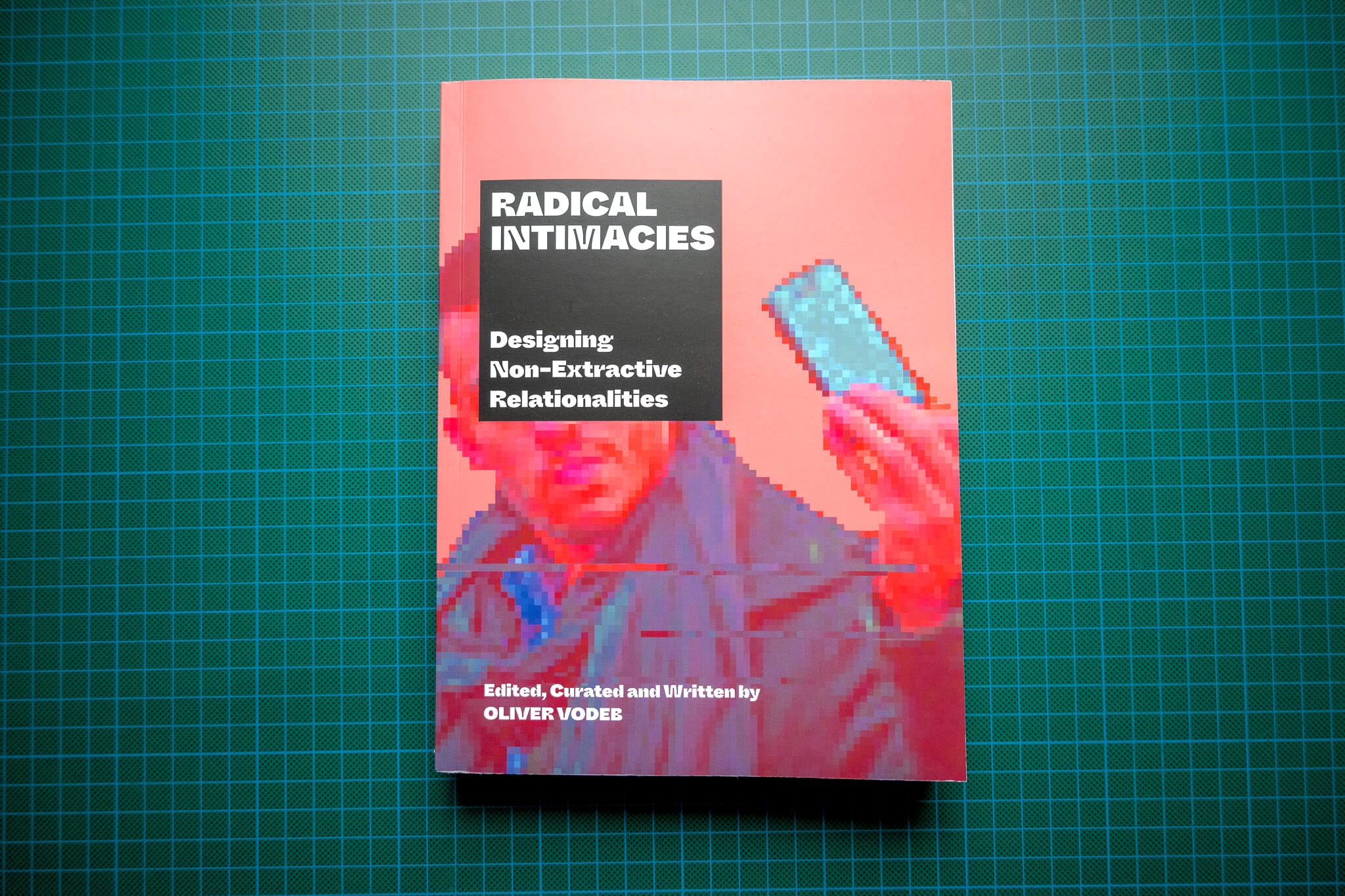
Obviously you should be reading the Radical Intimacies, Designing Non-Extractive Relationalities book, find more about the it: here.
PODCAST CREDITS:
Hosted by: Oliver Vodeb/ Memefest. The podcast is a collaboration between Memefest and Intellect publishers.
Images by Sandy Kaltenborn/Image Shift and Rok Klemenčič
Music: Thanks to Bait for their song Property Law. Two best friends meeting seasonally in bucolic surrounds to generate improvised music. Property Law recognises the Indigenous peoples of the world's relationship to land. As in, "we don't own the land. The land owns us." Each of us is only passing through. Empires, Epochs come & go, but the spirit of the land persists.